Read-Only Archive โ€” 68,067 posts ยท 4,889 threads ยท 2,978 members ยท preserved from 2006โ€“2015
Introduction to reloading ammunition and saving some money!
#1
Reloading your own ammunition is, by far, the cheapest way to feed your shooting sport. The initial investment may be large, but the payoff continues for many years to come. Besides the benefit of the money savings, you can fine-tune a load to match a specific gun. This is crucial when it comes to building a gun/bullet combination that can shoot one ragged hole into your target.

I purchased my first loader from Dillon Precision back in 1994. It was $379 and was set to my caliber of choice, the 45ACP. Along with that, there were other accessories I wanted to make life a little easier. It took me 2 years to break even on my investment and I've been saving money ever since. This write-up is a quick review of reloading ammunition (specifically the 45ACP).

It is NOT a definitive guide, but it will get you started in the right direction. You should always consult reloading manuals and the operation manual of your reloading press for specific guidelines for setup.

ALWAYS WEAR SAFETY GLASSES AND GLOVES when handling reloading equipment or components. Protect your eyes, lungs, and skin from potentially toxic chemicals or lead dust. Always work in a well ventilated area and away from heat source (like a hot water heater or furnace) and, (do I even need to say it?) don't be smoking a cigarette or other things while working with gunpowder!


Cost evaluation:

For this example, I am loading up some 230gr FMJ 45 ACP. Normally, a 50rnd box sells for around $18-$23, depending on brand. At gun shows, you can find 230gr Lead Cast 45 ACP that was reloaded by pros (or amatures) for around $13.00.

At MidwayUSA.Com, the cheapest they offer is Magtech 230gr FMJ 50ct for $18.89 or 1000ct for $399. This is my baseline for this cost evaluation. By the way, this is actually a sale price. Makes for a good argument for those who say, "Why reload? I'll just buy ammo when it's on sale and stock up!" Let's see the chart.


Chart #1 shows the cost of $453 to load the same 1000 rounds with newly purchased brass. No savings here. It's hard to beat the production of a company that turns out millions of bullets a day. Notice the cost of using Once fired brass, which is $344. That's a $55 savings. More importantly look at the cost of the 2nd thousand, when you reuse the brass. $259.00! That's a savings of $140. Or, just compare the cost of 50ct, $12.95 vs $18.89 for factory ammo.

Chart #2 shows the cost if the bullet is changed to a lead cast bullet. The savings are more significant. Cast bullets are fine to run for a target gun, so long as you clean the gun more frequently. You can save over 50% after your second set of 1000 rounds.

I have my own sources for components. Today I'm buying my 230gr FMJ from Precision Delta and 1000 bullets is only $130 delivered. Powder and primer I can get from a local source and save me 15% overall.

Generally, no matter how you slice it, reloading will provide you with a cost savings over time and can yield some incredibly accurate ammunition.
#2
What do you need to start reloading:

1. Reloading press: If you are a seasonal shooter or don't plan on shooting gobs of ammo each month, you can do very well with a single stage press. They tend to be cheaper, as you can only load your ammo in "stages". First, you resize ALL your brass. Then, you deprime/prime ALL your brass. Next, you powder measure ALL your brass. Then, you seat your bullet into ALL your brass. Lastly, you crimp ALL your finished bullets. Most people do sets of 50 or 100 rounds. Since the press is a single stage, each stage may need a separate tool, such as a hand priming tool to seat the primers into the brass casing. Also, a power drop funnel, to measure and pour the powder into each brass. It's a slower process but, with practice, you can average 100-150 rounds an hour. If you tend to load more bottleneck rifle rounds, the single stage press can give you better controlled accuracy in your loads. I have a single stage press, and I use it for loading my match .308win and soon, my 300 Win Mag.

If you shoot a lot, like me, a progressive press will save you lots of time by combining multiple function. Although a progressive press "can" do bottleneck rifle rounds (like the .223rem or .308win), I primarily use mine to do straight-wall pistol rounds (like the 9mm and 45ACP). A progressive press allows you to do 4-5 steps at the same time, by the use of a revolving turret. Each stage of the turret does a function. By the 4th or 5th pull, you will have a finished bullet and every pull thereafter. This is why I chose the Dillon Precision 550 progressive press. When all is perfect, I can push out almost 600 rounds an hour! Others make progressive presses, too. They can also be cheaper, but I like the reliability of the Dillon, plus it's unconditional "NO BS" lifetime warranty. You can blow it up with a grenade, bring them the pieces, the they will replace it for FREE!


Dillon 550 Progressive Press


Lee Classic Single Stage Press


2. Vibratory tumbler and cleaning media: The savings on reloading comes from the re-use of the brass. After shooting, the brass should be cleaned. Some people like to boil their brass to remove the greasy residue from the burnt powder, then tumble it in a media for final polish. I don't do that with my pistol calibers. I just dump in into dry corn husk media and let it vibrate overnight or for 4 hours. Every 4000 rounds or so, I toss out the media and replace it with clean ones. I like the corn husk media because it polishes as it cleans and doesn't create any dust since the media doesn't break down. The downfall is that it has to be replaced more often and takes longer to tumble. Some like the treated walnut, because it has a polishing rosin in it. To me, it's really messy and I HATE it. Another option is dry crushed walnut media. It breaks down faster, creates some dust, (wear a mask) but it has good abrasion for cleaning. You can add some polishing agent (non-ammonia based, like NU Finish Car Polish) to it and it will also polish. Some day, I may switch to this new Stainless Steel Tumbling Media. It never wears out, you can wash it, and it gets into the smallest areas. Expensive, but it lasts forever. Plus, I would have to buy a hexagon shaped rotary tumbler like the Thumbler Tumbler A-R12 No. 130.


Frankford Arsenal Quick-N-EZ case Tumbler


3. Sifter and/or sorter: After your brass has been tumbled clean, you need to get all that media off, and leave just the clean brass. A sifter comes in handy, as it will recover the media for later use. You can also buy sorting baskets. They fit over a 5-gal bucket and comes in 3 sizes. 38cal, 40cal, 45cal. This offers a quick way to sort out multiple calibers.


RCBS Rotary Case and Media Separator


Shell Sorter Brass Sorter, 3 bowl set


Note: Lyman makes a vibratory tumbler called the Auto-Flo. It has a spout on the bottom of the tumbling drum. When the brass is cleaned, place a bucket under the spout, remove the rubber plug, and turn on the tumbler. The vibration will cause the media to flow out, leaving you with nothing in the drum but clean brass (as the theory goes). Well, it gets enough of it out, and may save you time.

Here's a video on the Lyman tumbler and some economical alternative cleaning media.


4. Case lube: Case lube is a dry lube that you spray onto the outside of the brass. It allows the brass to easily slip in/out of the reloading dies and speeds up the process, while creating less stress on the brass. This will also extend the life of your brass. This is a MUST for loading bottleneck cartridges (like the .357sig, .223rem, .308win and most rifle cartridges). The goal is to get the lube on the outside of the brass ONLY. Getting any inside can foul your reloading powder. Therefore, I stand my brass with the primer facing up. Then, I add a light spray.


Hornady One Shot Case Lube


5. Bullets and brass: Depending on your loads, you can vary the cost by changing the weight of the bullet, using lead cast, copper wash, copper jacket, or hollow points. The more you buy in bulk, the greater the savings. If working with lead, wear gloves. Brass can be purchased as New, Once-Fired, or recycled. Recycled basically means you find them on the floor at the shooting range or the desert. Or, it's brass you've accumulated from new ammo or brass given to you. Basically, it's unknown brass. Is it bad? No, just as long as it's not aluminum casing (as found with most CCI Blazer brand ammo) or steel casing (as found with foreign military surplus). In any case, find them, save them, and store them. Brass is one of your most expensive start-up costs. Always inspect each piece of brass for cracks, bulges, or stress fractures. If you see anything out of the ordinary, trash them.

Most foreign military brass also have Berdan primers, which cannot commonly be reloaded. What's the difference? Our standard "Boxer Primer" brass has a single flash hole and come in two standard sizes; large or small. If loading pistol, then it'll be large pistol primer or small pistol primer. If loading rifle, it will be large rifle primer or small rifle primer. Some primers come in "magnum". Dimensionally, they are the same, but just burn hotter and longer. Berdan brass has two smaller flash holes and an anvil on the inside of the casing (where as the boxer primer has the anvil in each primer), which is use to ignite the primer from the inside of the case. Trust me on this, they are a pain in the butt to work with and they don't have a standardization. Make sure your brass has a single flash hole and/or are designed to use standard boxer primers.


Boxer Primer vs. Berdan Primer

Note: Traditionally, the 45ACP uses a large pistol primer. In recent years, due to the shortage of large primers, some manufactures have started making 45ACP with small pistol primers. So, it is important to inspect your brass to make sure you are using the correct size primer.


Once Fired 45 ACP Brass


Precision Delta 45 cal 230gr FMJ
#3
continued...

6. Powder: A 1-LB can of powder is 7000 grains. Most handgun loads require 4-8 grains of powder. You can typically get 1000 loads from a 1-lb can of powder. You can save more money by buying a 4-lb or 8-lb can of powder. I suggest wearing gloves when handling powder.


Alliant UNIQUE smokeless powder


7. Primers: Primers generally come in 100ct packs or 1000 ct boxes. The more you buy, the cheaper it gets. Wear gloves when handling primers. The standard primer is called "Boxer Primer". Everyone just calls them "primers". If you have a single stage press, you'll probably need a hand priming tool. Lee Precision makes them for $20.00.


CCI Large Pistol Primer #300


Lee Auto Prime XR Hand Priming Tool w/ shellholder #2


Note: Powder and primers should be stored in a dry cool place. Humidity can destroy powder, and heat is BAD for everything. I don't recommend storing it in a home (for obvious fire reasons). I picked up a 4-drawer fire cabinet from a yard sale. I put my stuff in there, along with a large desiccant pack. I also save those little packs when I find them in my bulk food stuff, in new shoe boxes, and various places. I usually end up with a bunch of them during Christmas, as they are in almost every packaging. During the summer, I place them outside for a day and the heat of the sun dries them out, and are ready for reuse.

8. Powder scale: I use a digital scale because it's easier to read and more accurate. You can go cheap and use a manual scale, but I don't recommend it. This will be used to weigh your powder. For
you benchrest shooters, you can use it to measure the bullet weights.


9. Caliper and a "go/no-go" case checker: Once you finish a load, you need to make sure that it's dimensions meet the min/max for that round. A reloading book will have the measurements. A caliper will allow you to check the dimensions so you are within safe working specs. They also sell a "go/no-go" device which is like the chamber of a barrel. You can drop the finished round into it. If it fits, it's good. If it does not, then something needs to be adjusted. I like to use the "go/no-go" to quickly do random quality assessments. I check my finished rounds every 100 rounds. A caliper is a MUST for initial setup.


10. Ammo bag or boxes: If you load several types of ammo, you can invest in ammo boxes. I like using an ammo bag, as I typically load 1000+ rounds of the same ammo. Dillon makes a bag that has a baffle separator. You can put finished ammo on one side and empty brass in the other. Alternatively, army surplus 50cal ammo cans work well, too. They stack well and great for "grab and go" during a zombie attack. :) In any case, store loaded ammo (and components) in a dry cool place.


Dillon Precision 'Border Shift' Ammo Bag


MTM Zombie Ammo Can


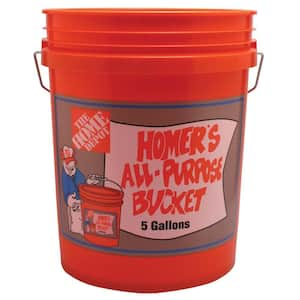
11. Storage tubs: Once you start loading, you'll start picking up empty brass cases from the shooting range or the desert. Having some storage tubs to keep them separated is a time-savings habit. You don't need to get fancy. I use 5-gal orange buckets that I get from Home Depot, or get free ones from Chinese restaurants. They get their Soy Sauce in these same buckets. Better yet, find a painting company. They usually have 5-gal used paint buckets lying around.


Home Depot 5-gallon orange bucket


12. Protective eye wear, gloves and dust mask: Always work in a well-ventilated area. Wear safety eye wear in case of explosion, wear rubber/latex gloves to prevent chemical transport to the skin. There is lead in cast and non-FMJ bullets, some bad stuff in primers and powder. I also recommend some kind of dust mask if you use walnut cleaning media, as it kicks up a lot of dust. Oh, as if it wasn't perfectly obvious.. NO SMOKING!!!
#4
LETS START SETTING UP AND LOADING - For the purpose of this write-up, I will be describing the use of my Dillon 550 progressive press and loading 45ACP. Setting up your loading dies is crucial. This takes the most time in the beginning. Once the dies are set, you can lock them in place and never touch it again, unless you change the load for that specific caliber. Usually this happens when you change from a different bullet weight or a different power load.

Stage 1- Resize, deprime/prime: With the primer tube loaded and the first die set in place, you insert your empty brass (with the old primer removed) into the first stage. The down stroke of the lever will raise the brass into the the first die. You want to screw the die low enough cover the length of the pistol brass. For brass that has a shoulder (like a .30-06 or 357sig), you set it low enough to meet the shoulder. Once the height of the die is set, you can lock it down. The next step is to lower the depriming pin far enough to press out the old primer. I do this by pushing the priming pin through until the pin comes out the primer hole and bottoms out, then lock the pin down. On the upstroke, it lowers the brass and seats the new primer into the primer pocket. This is the first benefit of a progressive press. All three of these functions are completed in one stroke.


Stage 2 - Belling case and powder dispensing: Rotate the turret to Stage 2. On the down stroke, it will raise the brass to the powder funnel and drop the pre-measured powder into the brass. At the same time, it puts a light bevel on the mouth of the brass (don't bell the case too much, as it will weaken the brass and may cause cracks later). This will aid in seating the bullet in Stage 3. During the setup, you should have NO powder in the hopper. You will adjust the die and funnel so it shape the mouth of the brass and put enough bevel into it, then lock the die down. Now, fill the hopper with powder. Once the powder is poured, you can use the scale to check the powder amount and adjust the dispenser to put out the exact amount you need. Repeat this step until the powder is consistent within .1 grains. In between adjustments, you should drop several powder charges and check for consistency/accuracy.


Note: My red adjustment knob is not standard from Dillon Precision. I found the knob at ACE Hardware and just pressed it onto the adjustment knob. This allows me to make adjustments without tools, and I can mark which way to turn to increase powder, right on the knob.


Stage 3 - Bullet seating: Rotate the turret to Stage 3. Screw in your seater die (without the seating plug) and down stroke the handle. Screw down the die until it stops on the brass. The die should not reach the turret. Upstroke the handle to lower the brass casing. Now, place a bullet into the brass and down stroke it back into the empty die. Insert your seating plug and screw it down to seat the bullet. Check frequently and measure the seating depth of the bullet. Once the desired depth is reached (check with a caliper), lock down the seater plug. Some bullets have what's called cannelure, which is circumferential grooves or corrugated grooves on the bullet. It's to aid in locking the bullet into the brass, when a Taper Crimp is used. If you are loading a round and it has these, you need to make sure the the bullet is seated to where the cannelure is no longer visible on the brass. If not, the bullet may be passed the MAX length. Again, check the length with a caliper.

This adjustment is common when you change from a hollow point to a round nose, or from 230grain to 185gr bullet.


Stage 4 - The crimp: In this stage, the die will remove the bevel that was placed in Stage 2 and put some tension of the brass to the bullet. The tighter the crimp, the more pressure in can create. Depending on your load, there is a Taper Crimp and a Roll Crimp. 38special, 357mag, 44special, 44mag (most revolver dies) use roll crimps. I use a Taper Crimp for my 45ACP. To do this, rotate the bullet to Stage 4, then down stroke. Screw in the die and let it stop on it's own. Upstroke the handle and dial the die down a bit farther. Repeat this process until the bevel is gone and the bullet is smooth and uniform. Then, lock the die down. Some crimp dies are created specifically for either a Taper or a Roll crimp. Check your documents. Now, with the next rotation, you have a finished bullet. Get the caliper and measure the overall length. For bullets with necks and shoulders, measure them, too. If all is good, you're all set up for some Fast and Progressive reloading!


With practice, you will get faster and better. I enjoy this because it allows me to have a little personal time away from the wife and kids. When the weather is cool, I head out to my garage, turn on the radio, bring a few sodas, and crunch out a thousand rounds in a few hours. It's like ZEN time for me. :)

I also added some accessories to speed up my process, like a bullet tray on the left side of my press, an Low Primer Warning Sensor, and a Dillon Case Counter (no longer made) on top of my crimp die.

I hope this little write-up gives you some insight to the process of reloading and maybe give you the courage to jump into it. I hope to have a video set up soon, but no guarantee! I suck at videos.

Thanks for reading!
#5
Great post, we shoot 200+ rounds every week, mainly 9mm but some .40 and .380 as well. I'll have the space to do this in a few months so I will definitely give it a try.