Okay if
you haven't heard anything about DCcontrol, stop reading now and check out
Brian Baskin's site. Not only does he sell the controller we chose,
his site has everything you'd want to know about running an electric fan
set-up.
To run
your fan, you'll have to power it some way. With a mechanical fan,
it is always running with the engine, and your fan clutch allows it to
spin faster as it heats up. A basic set up would be to run the
e-fan off a relay and solenoid. You'll probably end up running 2
relays because e-fans can draw almost 100 amps at start up and then you
may need to upgrade your alt to handle the larger load. But again,
your fan will be running all the time like before, which we found out
after the install to be highly unnecessary. So again, by doing our
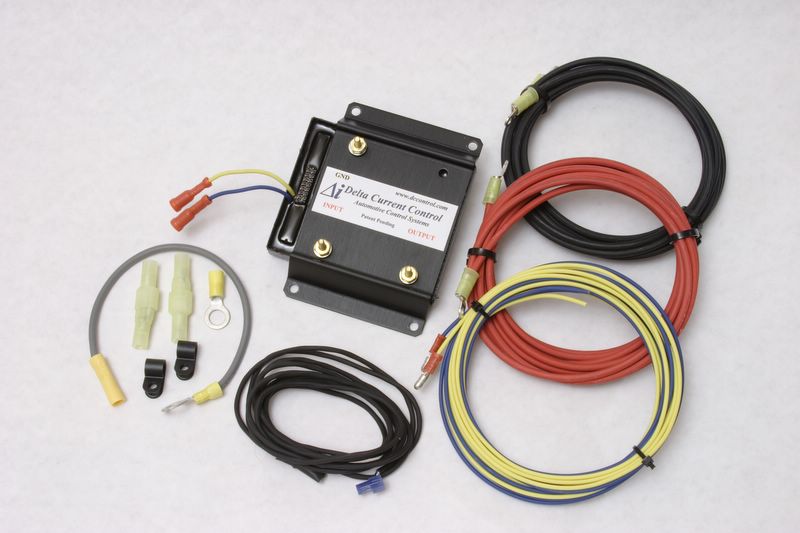
homework, we learned of the DCcontroller, which has everything you need
for the install and more.
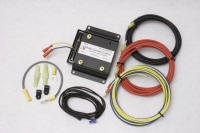
| Besides coming with all the wiring you'll need,
the DC is actually a, say it with me now, variable speed controller,
meaning the fan won't always be at constant speed (unless temp
conditions dictate it's need) or even always on. And the
controller limits the amp usage on startup to 50A lessening the draw
on your alt. You can read all this and more on DC's site, I'm
just trying to give you a heads up overview. |
 |
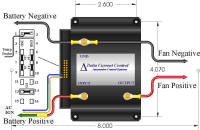 |
So now all you gotta do is hook it all up, and
the instructions provided are excellent in detail. You just
run it to the batt, to the fan, to the radiator for the heat sensor,
to an ignition source so it can shut off with your engine, and then
if you want, to your AC so the fan operates at a low power when your
compressor is running so you can cool the cooler faster and in turn
the inside temp. |
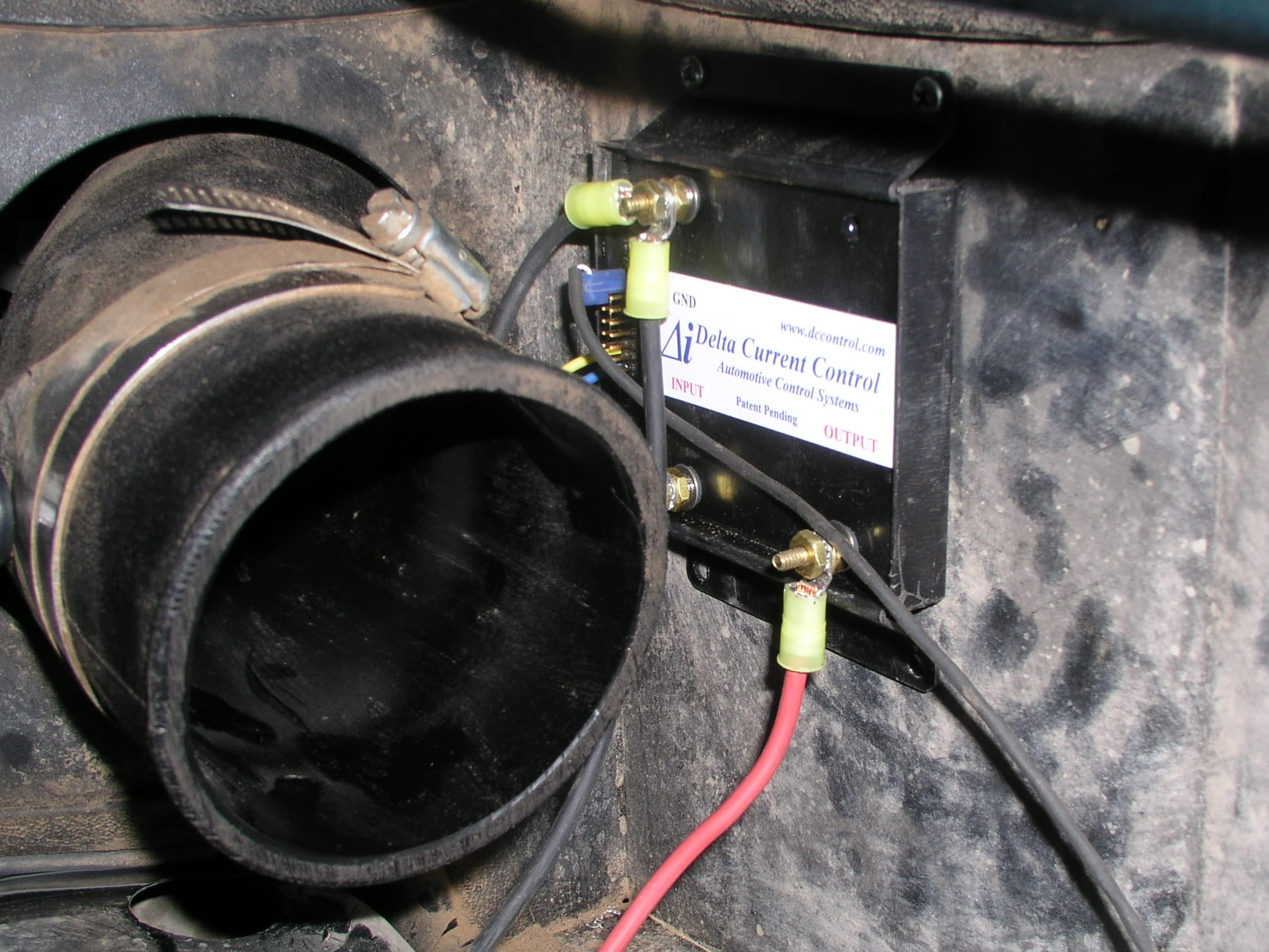
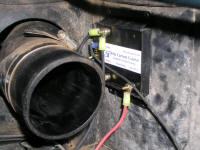
| We first chose a spot up and out of the way for
the controller unit. Right on the inside of Chris's K&N heat
shield worked out great in our case. Sure you can hide it, but
why, it looks cool enough by itself. The wires come ready to
hook up with half the connectors on (you trim the wire to your
desired length and the attach the other end). We ran the
positive posts to the Pos on the fan and batt and then both the Negs. |
 |
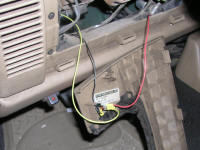
| For the ignition wire (yellow), we chose our
favorite switched source, the cig lighter. We used a wire tap
at the fuse and then added a switch into the mix so the fan could be
turned off for water crossings. We decided to put it in a safe
non precarious place in the dash to the left of the steering wheel.
We will probably take the bulb out of the switch, because it is kind
of annoying; should've gotten a non lighted one. And no, the
light doesn't come on when the fan kicks on, but DC sells a cool one
of those that changes colors depending on fan speed. |
 |
|
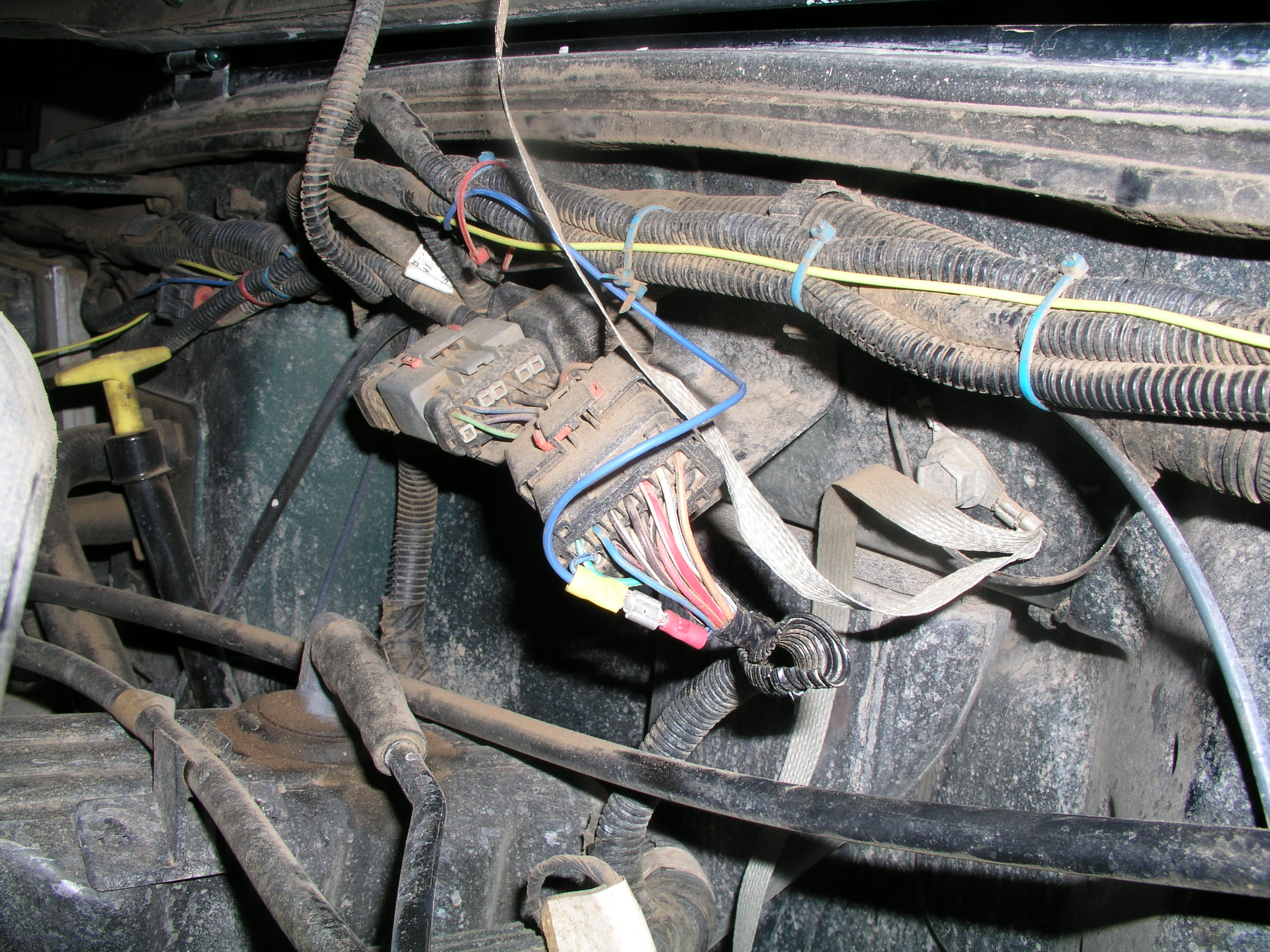
The tuffy was the ac wire, but that was
just because the compressor input wire was hard to find. But
we figured it out and won't keep it a secret, it's the Blue with the
Black stripe. The easiest way to get to it is right at the
large wire harness at the top center of the engine compartment.
I was short on those great clippy splicers that keep you from having
to actually cut the wire, so I used what I had and just used some
quick connects to hook it up. |
 |
|
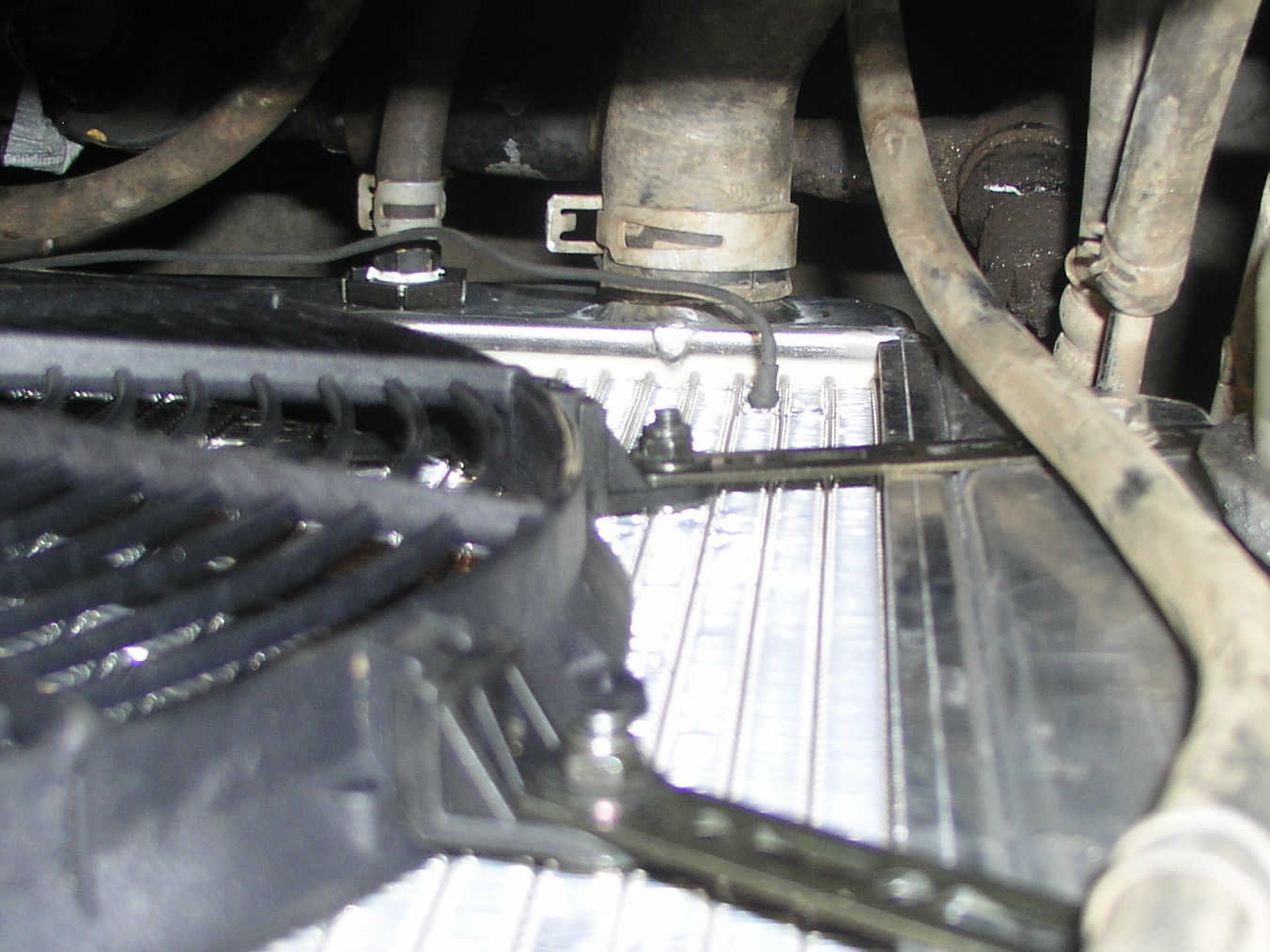
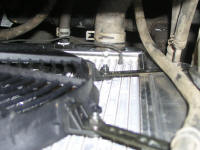
The provided sensor is just a wire with
a special end you jam into the radiator fins near the return hose
from the engine (they have other kinds available). We ran it
down to the correct spot, spread the fins and then clamped them back
around it for a tight fit. The other end plugs into pins 1 and
2 on the controller. The other pins can be used if you have a
different thermostat installed other than a 180 degree one. By
installing the provided "jumpers" you can raise or lower the desired
temp. |
 |
We
refilled the radiator checked our steps, and then decided to finally test
it. We turned the Jeep on, and nothing. But that was okay,
remember it only comes on when you need it. So I sat there with it
running in the garage, breathing deeply, waiting for it to come on.
As the minutes went by I started getting nervous about my electrical work.
At this point I hadn't hooked up the AC wire so I had to wait until it
thought it should come on. So I had another batch of fumes and
slowly none of it seemed to matter anyway...
Review
|